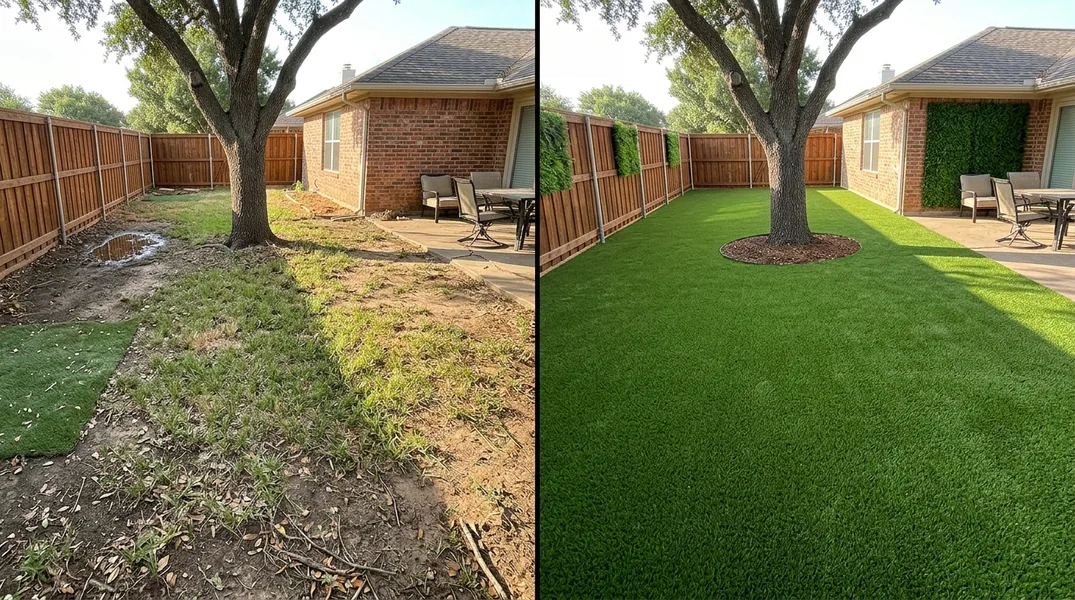
Why Arlington's Blackland Clay Demands Special Drainage Attention
If you own a home in Arlington, you already know that the local soil presents unique challenges. The blackland clay that dominates much of the region is heavy, dense, and notorious for poor drainage. When water sits on clay, it doesn't percolate downward; instead, it pools on the surface or creates soggy subsurface conditions that can undermine any landscaping project, including artificial grass installation.
This is precisely why proper base preparation and artificial grass drainage are non-negotiable for any successful installation. Without the right foundation, even the highest-quality turf will fail prematurely. Water trapped beneath the grass can cause the backing to deteriorate, promote mold growth, create unpleasant odors, and eventually lead to turf failure. The good news is that with the correct approach to soil preparation and underlay selection, you can transform even the most problematic clay lot into a beautiful, long-lasting artificial grass landscape.
Understanding What to Put Under Artificial Grass in Clay Soils
The question homeowners ask most often is simple: what to put under artificial grass? The answer depends on your existing soil conditions, but in Arlington, the foundation typically requires multiple layers working together. The base layer is usually crushed limestone or recycled asphalt millings, which compact well and provide structural support. This layer is typically 2 to 4 inches thick and serves as the backbone of your installation, preventing settling and creating a level surface.
Above the base, most installations include a secondary layer of sand or a manufactured drainage base product designed to improve water movement. This intermediate layer fills voids in the base material and allows water to flow laterally toward drainage points rather than pooling directly under the turf. In areas with particularly poor drainage, like properties with heavy clay, some installers add a geotextile membrane between layers to further manage water flow. The final component is the artificial grass underlay, which sits directly beneath the turf and protects the backing while allowing moisture to pass through.
The Critical Role of Proper Turf Base Prep in Arlington Installations
Before any material goes down, the existing soil must be evaluated and often removed or significantly amended. This is where turf base prep becomes the foundation of success. A qualified installation team will excavate the area to remove the native clay to a depth that accommodates your new base layers while maintaining proper grading and slope. Proper slope is essential for drainage; typically, a minimum of 1 percent slope (roughly 1 inch of drop per 8 feet of length) ensures water moves away from structures and toward drainage areas rather than pooling in low spots.
Once the clay is removed or compacted, the new base materials are installed in layers, with each layer compacted to ensure stability and proper water flow. This isn't a process where you can cut corners. Inadequate compaction leads to settling, which creates depressions in your lawn and disrupts water drainage patterns. Poor grading causes water to collect in certain areas, defeating the entire purpose of your drainage system. In Arlington, where heavy rains and occasional flooding are concerns, the difference between correct and incorrect base prep can mean the difference between a lawn that lasts 15 years and one that fails in 3 to 5 years.
Artificial Grass Drainage Solutions for Blackland Clay Properties
Beyond the base materials themselves, artificial grass drainage often requires additional infrastructure in clay-heavy areas. Many professional installations include a perimeter drain system or French drain that channels water away from the turf area entirely. This is especially important if your property has poor natural drainage or if the artificial grass installation borders a foundation, patio, or other structure that could be damaged by moisture.
Some homeowners opt for permeable paving or gravel swales around the turf area to help disperse water. Others invest in subsurface drainage pipes that run beneath the base layers and direct water to a designated drainage point, such as a storm drain or a lower area of the yard. The cost and complexity of these solutions depend on your specific site conditions, but they're often well worth the investment for long-term performance. When you're considering Residential Artificial Grass Installation, ask your contractor about drainage solutions tailored to your property's clay composition and slope.
Choosing the Right Artificial Grass Underlay for Arlington Conditions
The artificial grass underlay is the final critical layer before your turf is installed, and it plays a surprisingly important role in long-term performance. There are several types available, each with different drainage rates and durability characteristics. Closed-cell foam underlays offer excellent cushioning and are ideal for high-traffic areas or if you're planning Pet Turf & Dog Run Installation. Open-cell foam or rubber-backed underlays provide faster drainage and are better suited for areas with heavy water exposure or poor base drainage.
In Arlington's clay environment, many professionals recommend an underlay with rapid drainage characteristics, typically 60 to 90 inches per hour or higher. This ensures that any water that does make it through the base layers moves quickly through the underlay and doesn't linger against the turf backing. The thickness of the underlay also matters; thicker underlays (typically 3/8 inch to 1/2 inch) provide better cushioning and longevity but must still allow adequate water passage. Your installation contractor can recommend the best underlay type based on your specific site conditions, the quality of your base preparation, and how the turf will be used.
Getting Professional Help: Residential Artificial Grass Installation Near Me
The reality is that proper base preparation and drainage design require expertise and experience. While some homeowners attempt DIY installations, the stakes are particularly high in Arlington, where soil conditions are challenging and mistakes are expensive to correct. A professional installation team understands local soil conditions, has the equipment to compact materials properly, and knows how to grade for optimal drainage. They can also assess your specific property and recommend the most cost-effective solution for your situation.
Arlington Turf Installation has spent years perfecting the art of artificial grass installation on blackland clay. Our team evaluates every property individually, designs a drainage and base prep plan tailored to your conditions, and executes the work with precision. Whether you're interested in Residential Artificial Grass Installation, Pool Surround Turf, or any other turf application, we understand that the work below the surface is just as important as what you see above it. If you're ready to transform your yard with artificial grass that will actually last, contact us at (817) 670-4823 or request a free estimate today. We'll assess your property, explain your options, and ensure your installation is built on a foundation that will serve you for years to come.
Looking for a professional artificial grass installation company in Arlington? Arlington Turf Installation responds fast for all your artificial grass installation needs.
Get a Free Quote